
Radiator fan in cars

Radiator fan in cars

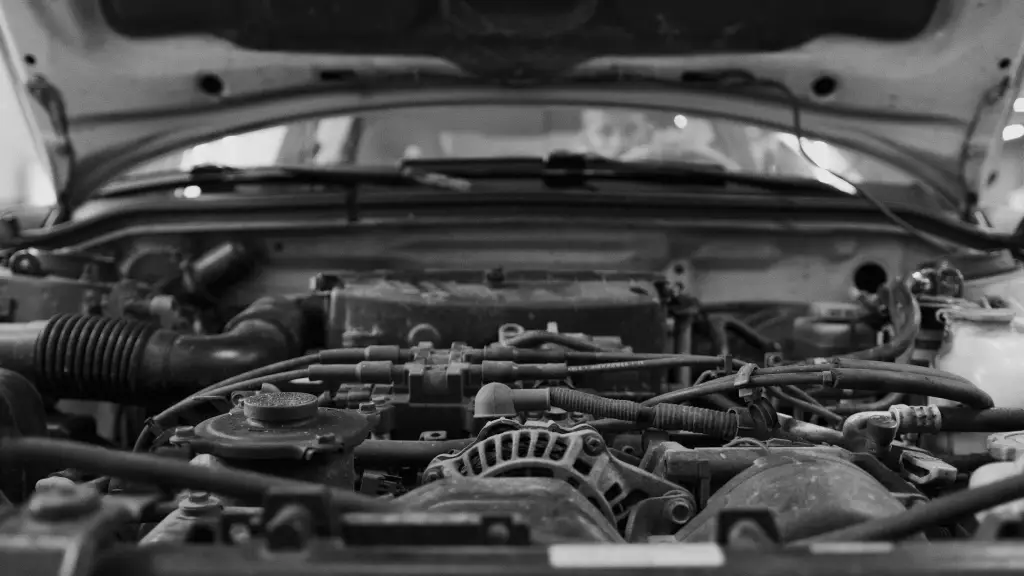
The radiator fan is used to improve cooling of the coolant by increasing the speed and amount of air passing through the radiator. The fan is usually installed between the radiator and the engine in a special casing.

Structurally, the radiator fan combines four or more blades located on a common pulley. To increase the air supply, the blades are installed at an angle to the plane of rotation.

The radiator fan can have various types of drives: mechanical, hydromechanical, electric.


The mechanical fan drive is a permanent drive from the crankshaft through a belt drive. The disadvantage of this drive is the significant cost of engine power to rotate the fan. Therefore, at present, a mechanical fan drive is almost never used.

The hydromechanical drive of the fan can be represented by a viscous coupling or a hydraulic coupling. The viscous coupling has a permanent drive from the crankshaft. Partial to full coupling locks are performed with increasing temperature of the silicone fluid filling the coupling. An increase in temperature is a consequence of an increase in the crankshaft speed and engine load. Locking the clutch causes the fan to rotate. A hydraulic coupling, in contrast to a viscous coupling, is blocked by changing the amount of oil in the coupling.

The most common is the electric radiator fan drive. The drive includes an electric motor and a control system. The electric motor is powered from the vehicle electrical system. The control system ensures the operation of the fan depending on the temperature of the engine.

On some cars, the function of controlled fan run-out is implemented – automatic switching on of the fan after the engine stops. Fan run-out is made in order to better cool the engine, depending on the mode of operation before stopping.

A typical electric fan control circuit includes a coolant temperature sensor; electronic engine control unit; the fan on the relay and electric motor as an actuator.

The sensor detects the temperature of the coolant in the engine. On modern cars, two sensors can be installed: one at the exit of the engine, the other at the exit of the radiator. In this case, the fan is controlled based on the assessment of the difference in the readings of the sensors.

When operating the fan used other input devices: the rotational speed of the crankshaft sensor, airflow meter. Their readings are taken into account when determining the engine operating mode.

Signals from the sensors are transmitted to the electronic engine control unit, which processes them and, if necessary, activates the fan enable relay. The fan starts to run.

On cars equipped with an air conditioner or towing device, as a rule, two fans are installed, each of which serves its own relay on. Depending on the temperature, the fans can operate both separately and together.

Recently, instead of a fan enable relay, a fan control unit has been used, which provides efficient and economical operation of the fan.

Ultra Cash For Cars will buy your car that you want to get rid of because it is old, unwanted or junk car. We buy 4x4s, utes, vans, trucks. Why not cash for your car instantly? All you need to do is give us a call on 0434 450 140 or fill out the form on our website and we will get back to you with a quick quote.

    Get A Quick Quote


    Recent Blog

    Cash for Unwanted Cars Canberra

    Combining various electronic systems of the car in a network, in addition to exchanging information, allows you to organize their joint work. Based on this principle, an integrated system for controlling vehicle dynamics is built. The system combines the stability control system , steering , transmission and vehicle suspension, which previously worked independently.   The vehicle dynamics control system is aimed at maintaining directional stability, increasing maneuverability, reducing the load

    Old Car Removals Canberra

    Traction control (another name – traction control ) is designed to prevent slipping of the drive wheels. Depending on the manufacturer, the traction control system has the following trade names: ASR (Automatic Slip Regulation, Acceleration Slip Regulation) on Mercedes, Volkswagen, Audi and others; ASC (Anti-Slip Control) on BMW cars; A-TRAC (Active Traction Control) on Toyota cars; DSA (Dynamic Safety) on Opel cars; DTC (Dynamic Traction Control) on BMW cars; ETC

    Cash for Scrap Cars Canberra

    On cars, various types of bodies are used. It is the type of body that largely determines the price of the car, its overall dimensions, the estimated sales market and other consumer qualities. Body types vary in purpose, design, layout and degree of loading. Cars have, as a rule, passenger and cargo-passenger bodies of a semi-frame and frameless design. According to the layout, one-volume bodies (power unit, passengers and cargo

    The exhaust system (another name is the exhaust system, exhaust system) is designed to exhaust gases from the engine cylinders, their cooling, as well as reduce noise and toxicity. The exhaust system includes many structural elements, including an exhaust manifold, a catalytic converter, a particulate filter (on diesel engines), a muffler and connecting pipes.   All structural elements of the exhaust system are located under the bottom of the car.

    The radiator fan is used to improve cooling of the coolant by increasing the speed and amount of air passing through the radiator. The fan is usually installed between the radiator and the engine in a special casing. Structurally, the radiator fan combines four or more blades located on a common pulley. To increase the air supply, the blades are installed at an angle to the plane of rotation. The

    FAQ

    How much can I get for my car?

    It really depends on the vehicle age, make, model, condition, and demand for parts. Yet, our cash for cars Canberra service offers you up to $9,999. 

    Sure. Damage or scrap is not a problem for us, no repairs needed, just sell it as-is to us. 

    Pickup and towing are included with the service, it’s totally free. 

    Yes. Many unregistered vehicles are accepted.

    Once you accept the offer, we pick up immediately, mostly it’s done in a day. 

    Usually, you need to provide photo ID and proof of ownership.

    Non-running vehicles are accepted and we still offer a fair price.

    We service Canberra and surrounding suburbs.

    Customers Reviews

    Freddy A
    Freddy A
    I sold my old car to Ultra Cash for Cars and the whole process was incredibly fast. Their team arrived on time, inspected the car within minutes, and paid me instantly on the spot. No stress, no hidden surprises, just smooth service from start to finish
    Melissa Carter
    Melissa Carter
    I was worried because my car was badly damaged and no longer running, but Ultra Cash for Cars still offered me a fair price. The staff were friendly, professional, and the free towing service made everything so much easier
    Daniel Foster
    Daniel Foster
    Honestly one of the easiest car-selling experiences I’ve had. Ultra Cash for Cars handled everything quickly, from the quote to the pickup. The paperwork was simple and the customer service was excellent. My garage finally feels breathable again

    4.5

    GET A QUICK AND FREE QUOTE NOW OR CALL 0452 232 222

    Sell Your Car to Most Canberra’s Most Reliable and Honest Buyer

    Ultra Cash for Cars

    Copyright 2026 Ultra Cash for Cars. All rights Reserved.

    Phone: 0452 223 222

    Email:

    Address: 11 Whyalla Street, Fyshwick ACT 2609