Combining various electronic systems of the car in a network, in addition to exchanging information, allows you to organize their joint work. Based on this principle, an integrated system for controlling vehicle dynamics is built. The system combines the stability control system , steering , transmission and vehicle suspension, which previously worked independently. The vehicle dynamics control system is aimed at maintaining directional stability, increasing maneuverability, reducing the load on the driver. A system is special software that is
Traction control (another name – traction control ) is designed to prevent slipping of the drive wheels. Depending on the manufacturer, the traction control system has the following trade names: ASR (Automatic Slip Regulation, Acceleration Slip Regulation) on Mercedes, Volkswagen, Audi and others; ASC (Anti-Slip Control) on BMW cars; A-TRAC (Active Traction Control) on Toyota cars; DSA (Dynamic Safety) on Opel cars; DTC (Dynamic Traction Control) on BMW cars; ETC (Electronic Traction Control) on Range Rover vehicles; ETS ( Electronic
On cars, various types of bodies are used. It is the type of body that largely determines the price of the car, its overall dimensions, the estimated sales market and other consumer qualities. Body types vary in purpose, design, layout and degree of loading. Cars have, as a rule, passenger and cargo-passenger bodies of a semi-frame and frameless design. According to the layout, one-volume bodies (power unit, passengers and cargo are located in one spatial design), two-volume (power unit under
The exhaust system (another name is the exhaust system, exhaust system) is designed to exhaust gases from the engine cylinders, their cooling, as well as reduce noise and toxicity. The exhaust system includes many structural elements, including an exhaust manifold, a catalytic converter, a particulate filter (on diesel engines), a muffler and connecting pipes. All structural elements of the exhaust system are located under the bottom of the car. The exhaust manifold provides direct exhaust gas removal, as well
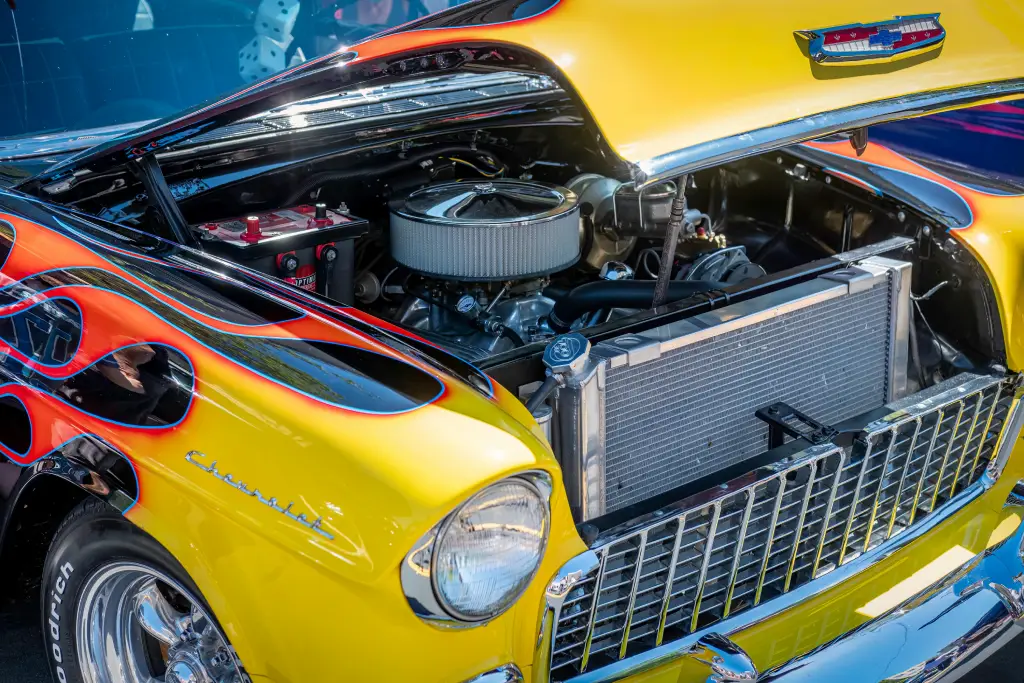
The radiator fan is used to improve cooling of the coolant by increasing the speed and amount of air passing through the radiator. The fan is usually installed between the radiator and the engine in a special casing. Structurally, the radiator fan combines four or more blades located on a common pulley. To increase the air supply, the blades are installed at an angle to the plane of rotation. The radiator fan can have various types of drives: mechanical, hydromechanical,
The coolant pump provides forced circulation of the coolant in the cooling system. In some sources of information, the coolant pump is called a water pump, which is essentially untrue. Water has not been used as a coolant for a long time. The pump is installed, as a rule, in front of the engine and can have two types of drive: mechanical and electric. A mechanical drive is made from a crankshaft or engine camshaft using a belt drive.
The cooling system is designed to cool engine parts heated as a result of its operation. On modern cars, the cooling system, in addition to the main function, performs a number of other functions, including: air heating in the heating, ventilation and air conditioning system ; oil cooling in the lubrication system ; exhaust gas cooling in the exhaust gas recirculation system ; air cooling in a turbocharger system ; fluid cooling in an automatic transmission. Depending on the cooling
The engines of our cars, also called “internal combustion”, perform the fundamental function of converting chemical energy into mechanical energy, through a series of fuel explosions. The fundamental difference between petrol and diesel engines is the way these explosions occur. How does the petrol engine work? To understand the actual difference between the two types of motor, it is good to first investigate its operation. Every single piston slides inside a cylinder, or combustion chamber, equipped with spark plugs and
Internal combustion engine The internal combustion engine dates back to the late 1800s and is the most common and used in most vehicles. First we must specify that there are different types of internal combustion engines . However, their operation is based on a fundamental principle: the transformation of the energy produced by combustion into mechanical energy. This type of motor differs in different classes and the two main varieties are: volumetric motors and continuous motors . Within these categories
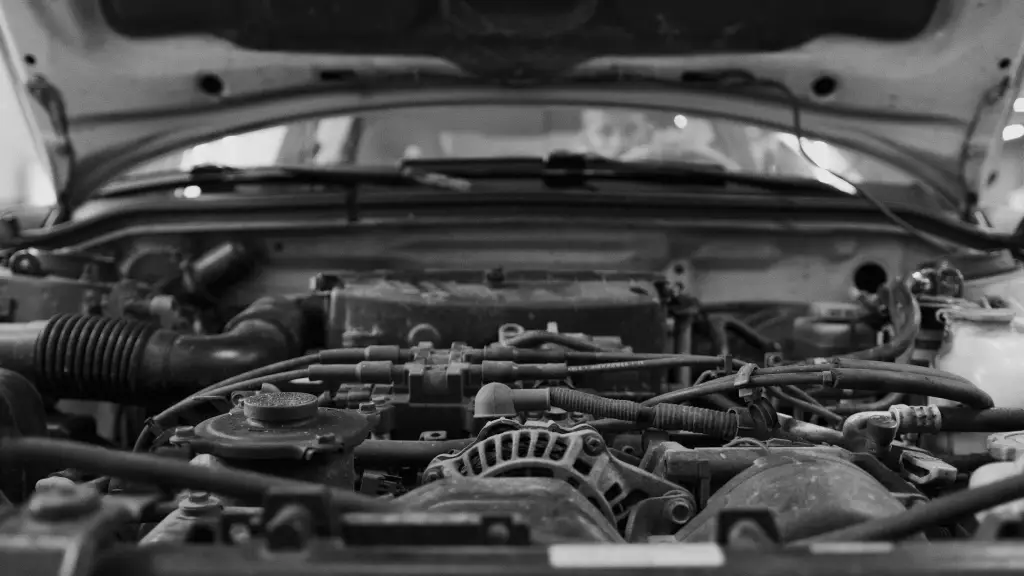
” Every good car should last as long as a good watch, ” said the far-sighted Henry Ford some time ago … and how to blame him. The engine is undoubtedly the heart of the car, the reason why every car exists and performs its tasks. According to the common opinion, the newer engines tend to have a much lower life cycle than those of the past, used to grind thousands of miles without showing the slightest sign of slowing
Ultra Cash for Cars
Copyright 2026 Ultra Cash for Cars. All rights Reserved.
Phone: 0452 223 222
Email:
Address: 11 Whyalla Street, Fyshwick ACT 2609